
 +34 68 911 88 69
 +382 69 704 986

14 August 2026
Citizenship or residence permit by investment: what’s best for investors

We provide comprehensive support for obtaining residence permits and citizenship
Submit a request to receive legal advice
Can an investment residence permit lead to citizenship?
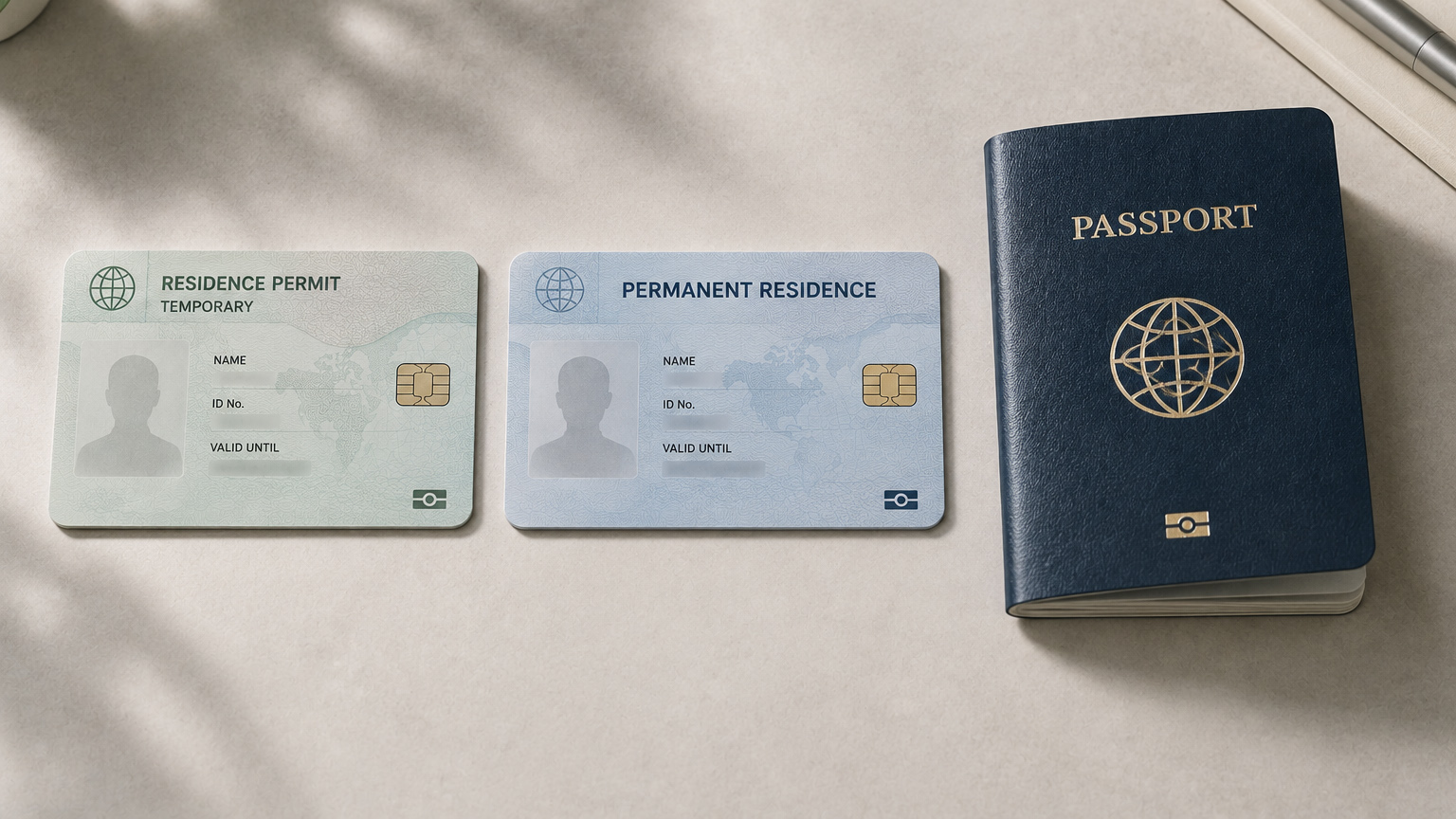
While an investment residence permit can be a starting point, citizenship usually requires going through the standard naturalization process. In most cases, however, you must go through the standard naturalization process, which includes meeting residency, language proficiency, and integration requirements.
For instance, to obtain a Portuguese passport, you must reside in Portugal for at least 10 years (7 years for citizens of the EU and Portuguese-speaking countries) and demonstrate sufficient Portuguese language proficiency. In Cyprus, you must hold a residence permit for a total of 7 of the last 10 years, including 12 months of continuous residence, before applying. In Greece, you must legally and continuously reside in the country for 7 years and hold a residence permit in one of the established categories, including investment.
To obtain citizenship in these countries, you must also know Greek and pass an integration exam. The exception is Turkey, where investors can apply for citizenship immediately after receiving a residence permit without having to live in the country or learn Turkish.
When is citizenship by investment the best option?
It is a good choice if you want greater travel freedom, backup status for your family, to expand your business into new markets, or to optimize your financial situation. This option doesn’t require a drastic lifestyle change or the necessity to close a business in your home country.
At a time when international travel and cross-border payments are becoming more complex, a second passport enables you to safeguard your assets and minimize your reliance on immigration bureaucracy. Citizenship by investment is processed much faster than traditional naturalization and offers more rights and freedoms than a temporary residence permit.

Mirsatori clients often choose this option to organize international logistics and protect their long-term capital.
Advantages of citizenship by investment programs
- Global mobility. Second citizenship expands your travel and business options. For example, with a passport from Antigua and Barbuda or Grenada, you can visit over 140 countries, including the Schengen area, freely or through a simplified procedure;
- Backup status without relocation. Citizenship by investment is ideal for individuals seeking a second passport without relocating. You don’t need to live in the host country to obtain a passport. Once issued, you don’t need to visit the country of your new citizenship, and this will not affect your status;
- Low-barrier programs are available. Investors with a limited budget can choose a second passport option. In Nauru and São Tomé and Príncipe, the minimum investment is USD 90,000; in Vanuatu, it’s USD 130,000. Meanwhile, most investment residence programs start at USD 290,000;
- Multi-generational status. Most CBI programs allow you to include your spouse, children, and parents in your application, and some programs, such as those in Antigua and Barbuda and Nauru, even allow you to include siblings. Furthermore, if you have children after obtaining your passport, they can obtain citizenship by descent;
- Tax planning. A second passport can be part of a strategy to reduce financial burdens when an investor changes their center of life and tax residency. For example, Vanuatu, Antigua, and Barbuda do not tax personal income, capital gains, or inheritance;
- Fund protection and international payments. A second citizenship simplifies working with international payment systems by allowing direct payments to foreign partners without risking delays or rejections.
Disadvantages of citizenship by investment programs
- No right to live or work in the EU. Most CBI programs operate in the Caribbean (Grenada, Saint Lucia, Antigua and Barbuda, and Saint Kitts and Nevis) and the Pacific (Nauru and Vanuatu) regions. If you receive citizenship through one of these programs, you will not be able to live, work, or conduct business in the EU with the same rights as local citizens. You will need a reason to move there and complete immigration procedures;
- Loss or freezing of capital. To acquire citizenship by investment, you must either make a donation to a government fund or purchase real estate. In the former case, the contribution is non-refundable. In the latter case, you generally cannot sell the property for a government-mandated period (3 to 7 years) after purchase, which temporarily blocks access to capital;
- Complex due diligence. Due diligence is mandatory for participation in the CBI program if you are over 16 years old. This process involves analyzing the applicant’s biography, reputation, and source of capital. Law enforcement agencies are typically involved, and Interpol and other international databases are used. For example, if you are found to be on a sanctions list, your application may be denied, even if you have the required investment amount;
- Maintaining tax obligations without changing your residency. Having a second passport alone does not lead to tax optimization. To take advantage of the tax benefits of your new country of citizenship, you must move there and live there for a period of time to obtain residency. For instance, in Antigua and Barbuda, you generally need to be physically present for at least 183 days per tax year. In Vanuatu, you must be present for the same period over 12 calendar months.

When is an investment residence permit the best choice?
An investment residence permit is ideal if you want to settle in a specific country, live there, work there, and use its infrastructure. However, it is not critical that you obtain citizenship quickly. This option is worth considering when freedom of movement is less important than having a place to live and do business. For entrepreneurs who need a physical location in the EU or Turkey, a residence permit is a faster solution than citizenship.
Advantages of residence permit by investment programs
- Fast immigration. A residence permit allows you to live in the chosen country long-term—usually 2 or more years, depending on the program. This gives you access to foreign markets, the banking system, healthcare, and education. As long as you maintain the grounds for your residence and meet all the conditions, you can extend your residence permit, and eventually, you will have the right to apply for citizenship;
- Travel within Europe. Residence permits in Portugal and Greece allow you to travel within the Schengen area and stay for up to 90 days within a 180-day period. Investors who need a residence base and freedom of movement within Europe choose these countries’ programs;
- Family relocation. In some countries, such as Cyprus and Turkey, investment residence permits extend to a spouse and dependent children, who can be included in the application. If you participate in the Portuguese or Greek programs, your relatives may later receive a residence permit through family reunification.
Disadvantages of residence permit by investment programs
- Fewer rights than a passport holder. You cannot participate in the country’s political life, receive consular protection abroad, or pass on your residence status by inheritance. An investment residence permit generally does not grant work rights;
- Status renewal is required. To maintain your residence permit, you must adhere to the conditions under which it was issued. For example, if you purchased real estate, you must maintain permanent ownership of it. Once you sell the property, your status is revoked;
- More bureaucracy. To maintain or renew your residence permit, you must submit an application and supporting documents, including proof of investment, to the relevant authority within the specified timeframe. In Cyprus, for example, the purchase agreement, title deed, and bank statements must be submitted to the immigration department annually;
- Residency requirement in the country. To maintain your residence permit, you must be physically present in the country for a certain period. Sometimes this period is minimal; visiting Cyprus once every 2 years, for example, is sufficient. In any case, it’s important to maintain ties to the country where you received your status.
When should you consider the “residence permit + citizenship” combination?
A residence permit does not provide full rights, and CBI programs do not always provide the “right” passport. Therefore, experienced investors often choose to pursue dual status.
Consider this option if you need to achieve multiple objectives. For example, if you want immediate access to European infrastructure (banking, tax residency, and education for your children) while expanding your business travel, this option is ideal. A residence permit in Cyprus, Portugal, or Greece will help you achieve the first objective. For the second objective, Grenadian citizenship is optimal. Its passport allows entry to more than 140 countries, including China, Hong Kong, the United Kingdom, and Singapore. Furthermore, Grenada is the only Caribbean country whose citizens can obtain an E-2 investor visa to the United States.
If you have the budget for both programs, consider a minimum investment of USD 400,000. Now, let’s compare a Portuguese residence permit with a low-cost CBI program in São Tomé and Príncipe. The minimum investment for the former is USD 290,000, and the administrative fee is USD 9,600. In the latter case, the investment is USD 90,000, and the application processing fee is USD 5,000. The total is USD 394,600. This does not include fees for document translation and certification, residence card or passport production, or travel and accommodation costs.
We help you obtain a residence permit or second citizenship
Get a personalised consultation and a free assessment of the best immigration options from a MIRSATORI specialist
Submit your request and get advice from an expert

How can you choose the right program and avoid mistakes?
There is no one-size-fits-all answer to this question. It is an individual decision that should take into account your life goals, plans, family situation, and financial capabilities.
Decision-making matrix
| Goal | Recommended investment program |
|---|---|
| Relocate the whole family quickly for permanent residence in the EU | Cyprus permanent residence |
| Obtain a second passport as quickly as possible | São Tomé and Príncipe citizenship |
| Secure a strong second passport for greater travel freedom | Caribbean citizenship |
| Live in Europe | Residence permits in Portugal, Greece, or Cyprus |
| Travel freely within the Schengen Area | Residence permits in Greece or Portugal, or Caribbean citizenship |
| Obtain a status together with an investment asset | Residence in Turkey or Cyprus through real estate; citizenship in Egypt, Vanuatu, or Caribbean countries through property investment |
| Obtain a second passport with a minimal budget | Citizenship in Vanuatu, Nauru, or São Tomé and Príncipe |
| Create a backup plan for a large family, including a spouse, children, parents, grandparents, and siblings | Citizenship in Antigua and Barbuda, Nauru, or Grenada |
Common mistakes when choosing a program
Investors most often make the following mistakes when making a decision:
- Choosing a program based solely on price. A cheap passport may not provide the necessary mobility or facilitate other needs;
- Underestimating due diligence. Having the required amount does not guarantee approval for citizenship. Immigration authorities consider the origin of funds, business reputation, and sanctions risks;
- Insufficient understanding of the difference between a residence permit and citizenship status. These 2 statuses provide different rights and differ in terms of validity and retention;
- Ignoring additional costs. In addition to the investment contribution, there are government fees for application processing and verification, agent fees, document translation and legalization, travel expenses, and other costs;
- Not having a tax plan. To minimize your financial burden, you need to compare tax rates and available benefits across countries and decide on your tax residency in advance;
- Choosing a “trendy” program over a suitable one. You don’t need a popular option; you need a status that meets your needs, such as relocation, a second passport, family protection, or access to banking.

Contact the experts at Mirsatori for comprehensive guidance on eliminating risks, protecting your capital, and achieving your desired status. We will find a customized solution based on your situation and provide full support every step of the way.




The latest news, helpful tips, and insider information — all on our social media channels. Join Mirsatori’s communities and channels:


Fill out the form to schedule a meeting in the office or online

 +971 58 94 43 591
